Position an oven rack in the upper middle position and preheat to 425°F (218°C) using Conventional Bake mode. Line a light colored rimmed baking sheet with parchment paper. Keep the cubed butter and cultured buttermilk refrigerated until needed.
In a large mixing bowl, whisk together 2 1/2 cups (313 grams) flour, 1 tablespoon baking powder, 1/2 teaspoon baking soda, 2 teaspoons sugar, and 1 teaspoon fine table salt until evenly distributed.
Add the 1/2 cup (113 grams) cold cubed butter. Cut it into the dry ingredients using a pastry blender or two table knives until the mixture resembles coarse crumbs with visible flattened, pea sized butter pieces. Alternatively, pulse briefly in a food processor and return the mixture to the bowl. Do not blend the butter into a smooth paste. If it starts softening or smearing, refrigerate the bowl for 5-10 minutes before continuing.
Make a well in the flour butter mixture and pour in 1 cup (240 milliliters) cold cultured buttermilk. Fold gently with a spatula or wooden spoon until shaggy, moist clumps form. A few loose dry flour bits are acceptable. Only if stubborn dry pockets refuse to combine, drizzle up to 1 tablespoon (15 milliliters) standby cold buttermilk onto those spots and fold once or twice more. Do not knead or mix until smooth.
Lightly flour the work surface and hands. Turn out the shaggy dough with any loose crumbs and gently press it into a cohesive mass without kneading. Pat into a rectangle approximately 3/4 inch thick. Fold the left third toward the center, then fold the right third over it like a business letter. Rotate the dough 90 degrees, lightly dust if sticky, and pat back to approximately 3/4 inch thick. Repeat the letter fold, rotate another 90 degrees, and repeat once more, making exactly three letter folds total. Keep handling gentle so the cold butter remains in distinct pieces.
Pat the folded dough evenly to 3/4 inch thick, forming a rectangle approximately 7 by 9 inches. Dip a sharp 2 1/2-inch round cutter in flour. Press straight down through the dough and lift straight up without twisting. Cut rounds close together to obtain approximately 7-8 biscuits. Gather the scraps gently only once, pat them to 3/4 inch thick without kneading, and cut the remaining 2-3 biscuits for 10 total. For the approved scrap minimizing alternative, cut the final rectangle into 10 equal squares with a sharp knife or bench scraper.
Arrange all 10 biscuits on the prepared baking sheet with their outer edges lightly touching for taller biscuits with soft sides. Brush only the tops with the reserved 2 tablespoons (30 milliliters) cold buttermilk, avoiding drips down the cut sides. If crispier outer edges are preferred, arrange the biscuits approximately 1 inch apart instead. They may bake slightly shorter.
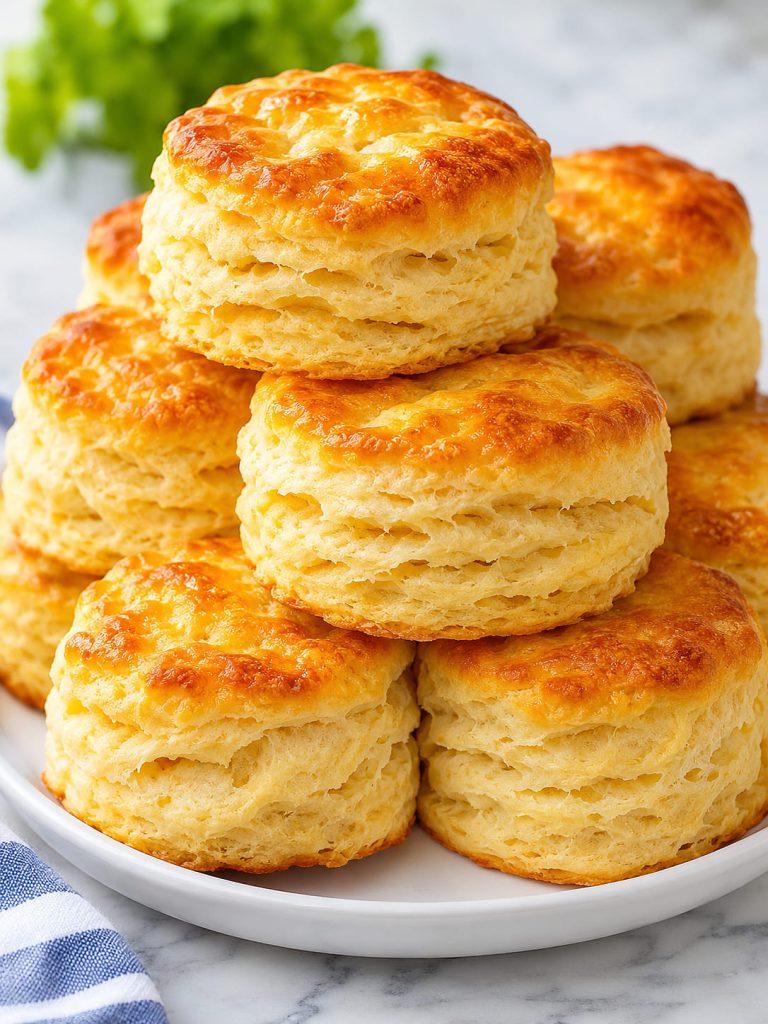
Immediately place the baking sheet on the upper middle oven rack. Bake at 425°F (218°C) on Conventional Bake mode for 15-18 minutes, beginning to check at 15 minutes. The tops should develop deep golden brown peaks, the touching sides should remain lighter golden, and the undersides should be light to medium golden without scorching. Look for biscuits risen to roughly twice their cut height, visible horizontal flaky layers, and outer sides that feel set rather than doughy.
Remove the biscuits from the oven. If using the optional finish, immediately brush their tops with 2 tablespoons (28 grams) melted unsalted butter. Leave the biscuits on the baking sheet for 5 minutes to let the interior crumb set slightly, then split and serve warm.
Notes
One biscuit is one serving. The approved square variation makes 10 equal square biscuits.
For the cold butter checkpoint, look for coarse crumbs with visible flattened pea sized butter pieces. If the mixture starts smearing, refrigerate for 5 to 10 minutes.
Use the optional tablespoon of additional cold buttermilk only when stubborn dry flour pockets refuse to combine.
For an approved salt alternative, replace 1 teaspoon fine table salt with 1 1/4 teaspoons Diamond Crystal kosher salt.
For a cultured buttermilk alternative, place 1 tablespoon white distilled vinegar or fresh lemon juice in a liquid measuring cup. Add cold whole milk to the 1 cup (240 milliliter) mark. Stir and let stand for 5 to 10 minutes until lightly curdled. Add gradually, holding back 1 to 2 tablespoons if the dough hydrates quickly. The biscuits may have less tang and slightly less vertical lift.
A seasoned 10 inch cast iron skillet may replace the parchment lined baking sheet. Arrange the biscuits touching and bake at 425°F (218°C), checking from 15 minutes and allowing up to 18 minutes as needed.
For a honey butter finish, stir 1 tablespoon honey into the optional 2 tablespoons melted unsalted butter and brush over the hot biscuits.
Store completely cooled baked biscuits airtight at room temperature for 2 to 3 days or refrigerated for up to 5 days. Reheat in a 300°F (149°C) oven for a few minutes until heated through or warm briefly in a microwave.
Freeze freshly cut unbaked biscuits slightly apart on parchment for 1 to 2 hours until solid. Transfer to an airtight freezer bag for up to 3 months. Bake directly from frozen at 425°F (218°C) with edges touching, adding a few extra minutes. Tent loosely with foil if the tops brown before the centers finish.
Completely cooled baked biscuits can be frozen tightly wrapped and bagged or in a freezer safe bag for up to 3 months. Thaw at room temperature or overnight in the refrigerator and warm at 300°F (149°C).