These condensed milk biscuits are sweet, buttery tea biscuits with lightly golden edges and a gently set center. If you’re familiar with British, South African, Australian, or New Zealand baking, think of a biscuit you would enjoy with tea rather than an American breakfast biscuit. The dough contains no eggs and uses a whole can of sweetened condensed milk. You’ll make 48 individual biscuits, so there’s plenty to share or save for another day. The important details are keeping the butter at the right temperature, shaping evenly, and knowing when the pale tops are fully baked.

What Makes These Biscuits Different?
Sweetened condensed milk is concentrated milk with added sugar. In this dough, it contributes sweetness and moisture while helping the ingredients come together. It isn’t the same as evaporated milk, which has a different sugar content and cannot replace it without changing the formula.
The butter and granulated sugar are creamed together before the condensed milk is added. This incorporates air and helps create the intended biscuit texture. Baking powder provides additional lift, while the flour gives the dough enough structure to hold its shape after pressing with a fork.
These are not flaky, layered biscuits made with cold butter and buttermilk. If that’s the style you’re after, our buttermilk biscuit recipe follows that different baking tradition. Here, the goal is a sweet biscuit that holds its shape, develops lightly golden edges, and firms as it cools.
The recipe below uses the entire 14-ounce can of sweetened condensed milk. You don’t need to measure out a partial can or find another use for the remainder.
Condensed Milk Biscuits
Sweet, egg-free, butter-based condensed milk tea biscuits made with a full can of sweetened condensed milk. Shaped into fork-pressed rounds and baked until lightly golden at the edges.
Ingredients
- 2 cups unsalted butter; 4 US sticks, 16 oz (450 grams)
- 1 1/2 cups white granulated sugar 300 grams; measure before creaming with the softened butter
- 1 14-ounce can full-fat sweetened condensed milk 395 grams; use the entire can at room temperature. Do not use evaporated milk
- 1 tablespoon pure vanilla extract 15 ml
- 5 1/2 cups all-purpose flour; 680 grams
- 4 teaspoons baking powder 16 grams; whisk evenly into the flour
- 1 teaspoon table salt 6 grams; whisk evenly into the flour and baking powder
Instructions
- Line 2 to 4 large rimmed half-sheet baking pans with parchment paper or silicone baking mats. Position an oven rack in the middle and preheat to 350°F (180°C) using conventional heat, or 325°F (160°C) using convection. Allow at least 20 minutes of preheating before the first tray goes into the oven.
- Place the softened butter and granulated sugar in the bowl of a stand mixer fitted with the paddle attachment, or use a large bowl and electric hand mixer. Beat on medium speed for 3 to 5 minutes, scraping the bowl once or twice, until the mixture is pale, smooth, and noticeably fluffy. The butter must be softened but not melted.
- Add the entire room-temperature can of sweetened condensed milk and the vanilla extract. Beat on low-to-medium speed for approximately 1 minute, scraping the bowl, until the mixture is smooth and fully combined.
- In a separate medium bowl, whisk together the all-purpose flour, baking powder, and table salt until evenly distributed.
- Add the dry mixture to the butter-and-condensed-milk mixture in three equal additions. Mix on low speed after each addition until barely incorporated. Stop while faint flour streaks remain, then finish folding with a spatula or lightly kneading for 3 to 4 gentle turns until the dough is soft, cohesive, and non-sticky. Avoid prolonged mixing once the flour has been incorporated.
- Portion the dough into approximately 1 1/2-tablespoon (38-gram) pieces. Roll each portion between your palms into a smooth ball approximately 1 1/4 inches (3 centimeters) across. Arrange 12 to 16 balls on each prepared half-sheet pan, leaving approximately 1 1/2 inches (4 centimeters) between portions on all sides.
- Lightly flour the tines of a dinner fork if the dough sticks. Gently press each ball to approximately 3/8 inch (1 centimeter) thick, leaving the traditional fork marks on top. Refrigerate the portioned trays for 15 minutes while the oven finishes preheating. Keep any trays waiting to bake chilled.
- Bake one tray at a time on the middle rack for 18 to 20 minutes at 350°F (180°C) conventional or 325°F (160°C) convection. Begin checking at 18 minutes. The bottom rims and outer edges should be light golden brown, while the tops remain pale cream to very pale gold with a dry, matte appearance. A gentle tap at the center should leave no wet indentation, and the outer edges should feel firm. Do not wait for deeply browned tops.
- Remove the baking sheet from the oven and leave the biscuits undisturbed on the hot pan for 5 minutes. Their centers may still feel slightly soft when first removed; the short tray rest allows them to firm before handling.
- Transfer the biscuits carefully to a wire cooling rack and cool for at least 10 additional minutes. They should finish setting with tender centers and lightly crisp edges. Repeat the baking and cooling process for the remaining chilled trays, allowing an additional 40 to 60 minutes of oven time for the rest of the full batch.
Notes
- Yield: 48 individual biscuits, approximately 38 g each. One biscuit is one serving.
- The 70-minute total covers 20 minutes of preparation, 15 minutes of shaped-dough chilling, 20 minutes of baking for the first tray, and 15 minutes of cooling. Baking all trays sequentially requires approximately 40–60 additional minutes of oven time.
- Use cool room-temperature butter at approximately 65–68°F (18–20°C). It should be softened but not greasy or melted.
- Use the entire 14-ounce (395 g) can of sweetened condensed milk. Evaporated milk is not an interchangeable substitute.
- Measure flour carefully. Weighing 680 g is recommended. If using cups, spoon the flour into the measuring cup and level it.
- For salted butter, use 450 g and reduce table salt to ¼ teaspoon (1.5 g).
- Light sweetened condensed milk may replace the full-fat version in the same 395 g quantity, with a slightly less rich result.
- High-fat block baking margarine may replace the 450 g butter, with less butter flavor.
- For chocolate chip biscuits, fold in 1½–2 cups (250–340 g) chocolate chips at the end of mixing. The biscuits may spread slightly more.
- For rolled cutouts, roll the dough to ¼ inch (7 mm), chill for 1 hour, and bake for 15–20 minutes. Allow approximately 3 mm of edge expansion.
- For thicker bakery-style biscuits, use 3 tablespoons of dough per portion, chill for 30 minutes, and bake for 25–30 minutes.
- Store completely cooled biscuits in an airtight container at room temperature for 1–2 weeks.
- Freeze shaped, unbaked portions for up to 3 months. Bake directly from frozen at 350°F (180°C) in a conventional oven, allowing approximately 1–3 extra minutes and checking the approved doneness cues.
- Contains milk and wheat.
Get the Butter and Dough Consistency Right
Butter temperature matters before you even turn on the mixer. Use butter softened to a cool room temperature, approximately 65–68°F (18–20°C). It should give slightly when pressed but must not look shiny, greasy, or melted. Butter that’s too warm may encourage the shaped biscuits to spread before their structure sets.
After the butter and sugar have been beaten for 3–5 minutes, the mixture should look paler and fluffier than it did at the start. Scrape the bowl so the ingredients mix evenly. Once the condensed milk and vanilla are incorporated, the mixture should look smooth.
Flour measurement is another important checkpoint. The recipe uses 5½ cups, equivalent to 680 g. Weighing is the clearest way to keep the dough consistent. If you’re measuring with cups, spoon the flour into each cup and level the top rather than packing it down.
Add the dry ingredients in thirds on low speed. Stop mixing when faint flour streaks remain, then finish gently with a spatula or a few light kneading turns. The finished dough should be soft, cohesive, and not sticky. It should hold together when rolled without needing repeated kneading.
If the dough seems unusually stiff or crumbly, check the flour measurement before changing anything. Too much flour can make the dough harder to shape and may contribute to a dry finished biscuit. If it feels greasy or spreads noticeably while you portion it, the butter may have become too warm.
Shape the Biscuits for Even Baking
Uniform portions make it easier to judge when a tray is ready. Each biscuit begins as approximately 38 g of dough, or about 1½ tablespoons. Roll each portion into a ball roughly 1¼ inches (3 cm) across.
Arrange the portions about 1½ inches (4 cm) apart on a lined baking sheet. Press each one with a fork until it’s approximately ⅜ inch (1 cm) thick. The fork marks give these biscuits their recognizable appearance and help keep the dough at a consistent thickness.
Don’t flatten some biscuits much more than others. Thin portions may brown before thicker ones have finished baking. Aim for a similar height across the tray rather than trying to make every fork pattern identical.
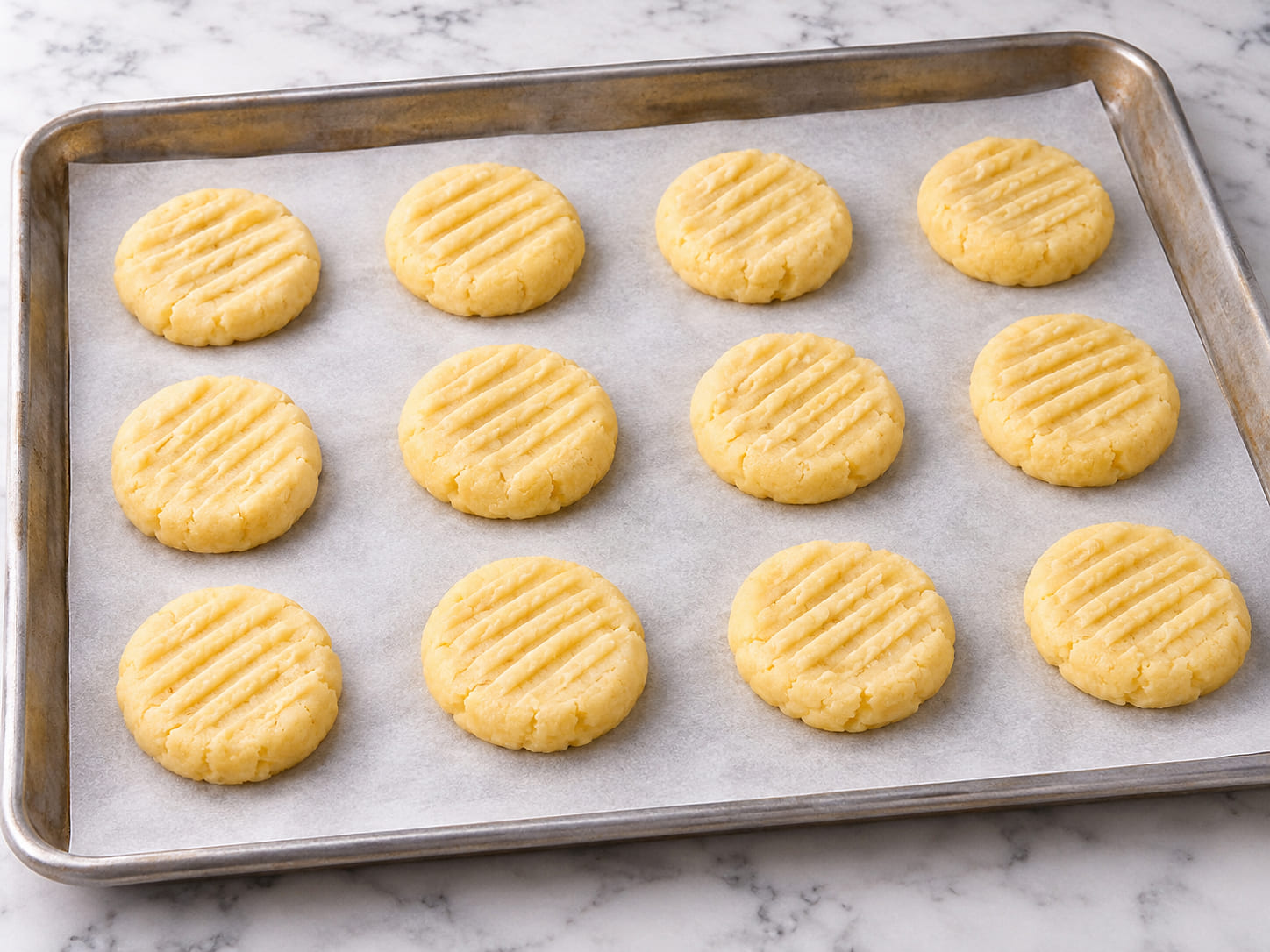
Chill the shaped tray for 15 minutes before baking. This is a rest for the shaped dough, not an instruction to chill the entire mixing bowl before portioning. Keep any waiting trays chilled while the first batch bakes.
A standard half sheet pan holds approximately 12–16 biscuits at the approved spacing. With 48 portions, plan for several trays rather than crowding the dough together. Leave the space between biscuits clear so they can bake without touching.
How to Tell When Condensed Milk Biscuits Are Done
The oven setting is 350°F (180°C) for conventional baking or 325°F (160°C) for convection. Use the middle rack and bake one tray at a time. Begin checking near the end of the 18–20 minute baking window, paying attention to the biscuits rather than relying on the timer alone.
Look for lightly golden brown edges and undersides. The tops should be pale cream to pale gold with a dry, matte appearance. A finished biscuit should have a firm outer rim and a center that gives slightly when touched without leaving a wet indentation.
Don’t wait for the entire top to become dark golden brown. Because these are sweet condensed milk biscuits, the edges and bottoms provide more useful color clues than the pale upper surface. Waiting for deep browning may leave the finished biscuits drier than intended.
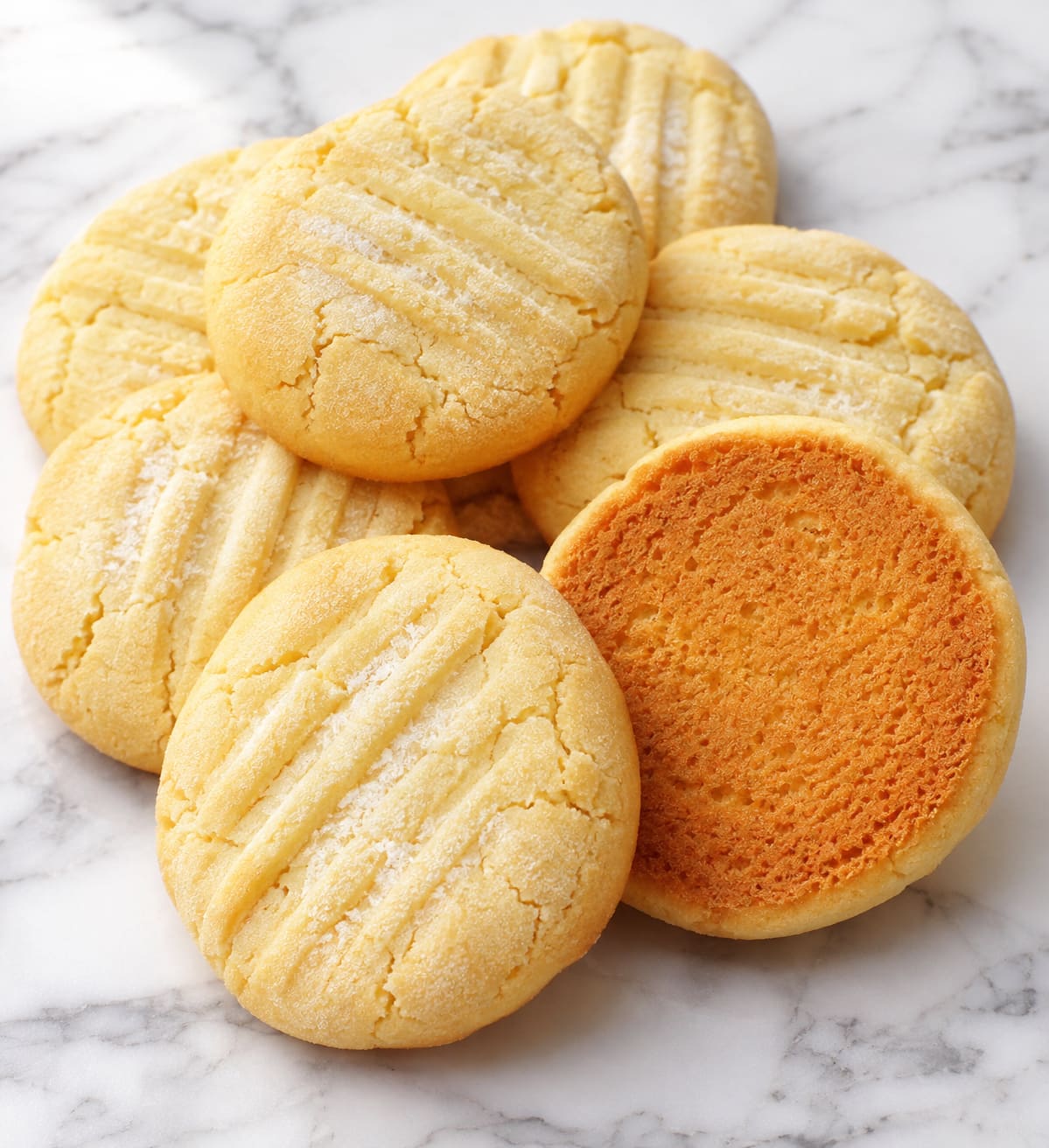
Cooling is part of the setting process. Leave the biscuits undisturbed on the baking sheet for 5 minutes after removing them from the oven. Then transfer them to a wire rack for at least another 10 minutes. They become firmer as they cool, so don’t judge their final texture the moment they leave the oven.
Common Problems and Practical Fixes
The Biscuits Spread Too Much
Butter that was too warm or a tray that wasn’t chilled long enough may contribute to spreading. Start with butter at the approved cool room temperature, press the portions evenly, and give the shaped dough its full 15-minute chill. Keep the remaining trays chilled rather than leaving them beside the warm oven.
The Edges Brown Before the Centers Set
Check that the oven is using the correct conventional or convection setting and that the tray is on the middle rack. Portions that are thinner than the approved ⅜ inch may also brown sooner. Keep the shaping consistent and use the center’s physical doneness cue alongside the edge color.
The Finished Biscuits Seem Dry
Excess flour, prolonged mixing after adding flour, or baking until the tops become deeply colored may contribute to dryness. Measure the flour carefully, finish mixing gently, and remove the tray when the doneness cues appear. Allow the biscuits to finish firming during the specified cooling period.
Some Biscuits Bake Faster Than Others
Uneven portion sizes or different pressed thicknesses can produce uneven results. Weighing portions and keeping them close to the approved dimensions makes the tray easier to assess. Bake one tray at a time on the middle rack rather than introducing different rack positions and baking conditions.
Approved Variations and Ingredient Choices
The original formula is designed around sweetened condensed milk with its full fat content, unsalted butter, and granulated sugar. If you need an approved alternative, keep the stated quantities and account for the expected change.
- Light sweetened condensed milk: Use 395 g in place of the regular version. The biscuits may taste slightly less rich.
- Salted butter: Use the same 450 g of butter and reduce the table salt to ¼ teaspoon (1.5 g).
- Block baking margarine: Use 450 g of block baking margarine with a high fat content in place of butter. Expect less butter flavor.
- Chocolate chips: Fold in 1½–2 cups (250–340 g) at the end of mixing. The biscuits may spread slightly more.
For a different shape, the approved rolled cutout variation uses dough rolled to ¼ inch (7 mm), chilled for 1 hour, and baked for 15–20 minutes. Allow for approximately 3 mm of edge expansion. For thicker biscuits in a bakery style, portion 3 tablespoons of dough per biscuit, chill for 30 minutes, and bake for 25–30 minutes. These variations have different dimensions and baking windows from the standard version pressed with a fork.
Don’t omit the granulated sugar simply because the condensed milk is already sweet. Sugar contributes to the structure of this approved dough as well as its flavor. Evaporated milk is also not a direct substitute for sweetened condensed milk.
Storage, Freezing, and Managing a Large Batch
Once the biscuits have cooled completely, store them in an airtight container at room temperature for 1–2 weeks. Wait until they’re fully cool before sealing the container so trapped warmth doesn’t introduce unwanted moisture.
You can also freeze the shaped, unbaked dough portions for up to 3 months. This is especially useful when you want to use the whole can of condensed milk but don’t need 48 baked biscuits immediately. Prepare the full dough, shape the portions, bake what you need, and freeze the remainder.
Bake the frozen shaped portions directly from frozen at 350°F (180°C) in a conventional oven. Keep the same oven temperature and allow approximately 1–3 extra minutes, checking for the same lightly golden edges, dry surface, and set center.
The stated 70-minute total brings the first tray through preparation, chilling, baking, and cooling. It does not mean all 48 biscuits will be finished in that time. Allow another 40–60 minutes of oven time when baking the remaining trays sequentially.
For another way to use sweetened condensed milk in baking, try our sweetened condensed milk bread. It’s a different dough and finished texture, but it provides a useful comparison for how the ingredient appears in bread baking.
A Closer Look at the Finished Texture
When the biscuits are fully cooled, the outer edges should feel set and the interior should no longer appear wet or doughy. A broken biscuit gives you another useful view of the finished center. Judge it alongside the pale top, golden underside, and firm rim rather than expecting the dark color of a heavily browned cookie.
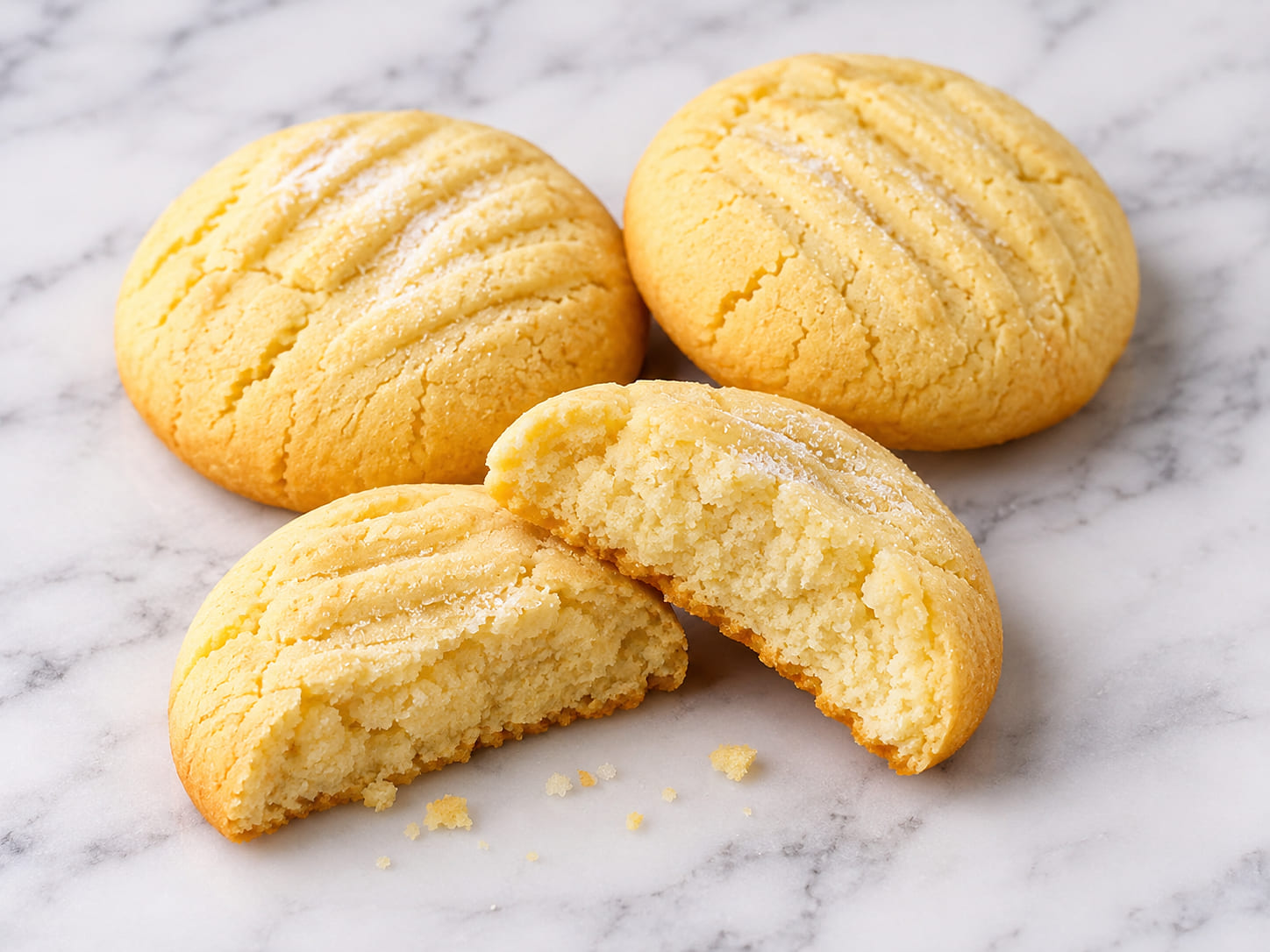
These small visual checks are particularly helpful on your first tray. Once you’ve seen the intended color and texture, you’ll have a clearer reference for the remaining batches and for biscuits baked later from frozen dough.
Frequently Asked Questions
Are condensed milk biscuits the same as American breakfast biscuits?
No. These condensed milk biscuits are sweet, butter-based tea biscuits similar to cookies. American breakfast biscuits are generally a different style of bake with a flaky or tender bread-like texture.
Can I use evaporated milk instead of sweetened condensed milk?
No. Evaporated milk does not contain the same added sugar as sweetened condensed milk and is not interchangeable in this approved formula. Use one full 14-ounce (395 g) can of sweetened condensed milk.
Do these biscuits need extra granulated sugar?
Yes. The recipe includes 1½ cups (300 g) of granulated sugar in addition to the sweetened condensed milk. The sugar contributes to the dough's structure and should not be omitted from this formula.
Why did my condensed milk biscuits spread while baking?
Butter that was too warm or insufficient chilling may contribute to spreading. Start with butter at 65–68°F (18–20°C), press the portions evenly, chill the shaped dough for 15 minutes, and keep waiting trays chilled.
Save This Recipe
Enter your email below and we'll send the link straight to your inbox. You'll also get fresh baking recipes each week.
More From Biscuits & Breads



You Might Also Like